A Span of Autonomy
‘An anarchist society, a society which organises itself without authority, is always in existence, like a seed beneath the snow, buried under the weight of the state and its bureaucracy, capitalism and its waste, privilege and its injustices, nationalism and its suicidal loyalties, religious differences and their superstitious separatism. Far from being a speculative vision of a future society, it is a description of a mode of human organisation, rooted in the experience of everyday life, which operates side by side with, and in spite of, the dominant authoritarian trends of our society‘ (Anarchy in Action, 1973).
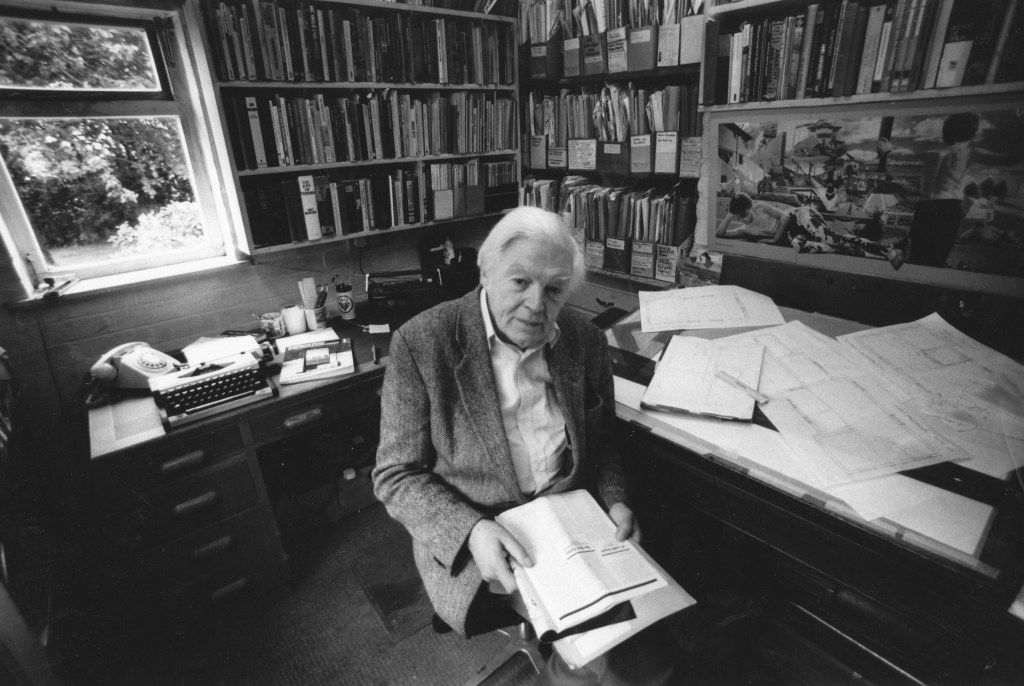
Colin Ward was far from the stereotype of the black-masked, bomb-throwing anarchist, and yet until his death in 2010 he was one of the foremost writers – and greatest thinkers – of what remains a misunderstood philosophy, but one that has a profound relevance for us today. His ultimate belief was in people, and that freedom is a social activity, but most importantly that it is always rooted in the local and the everyday.
An audio documentary about Colin Ward which tells the story of anarchy in the UK through his life and work, and an alternative history of the 20th century seen from an anarchist perspective.
Featuring interviews with friends, family, former colleagues and fellow anarchists including Ruth Kinna, David Goodway, Sophie Scott-Brown, Eileen Adams, Ken Worpole, Sol Pérez Martínez, Martin Stott, David Knight and Roman Krznaric.
Produced by Patrick Bernard with the generous support of a Crowdfunder and a Jen Angel Anarchist Media Grant from Agency and the Institute for Anarchist Studies.
Thanks to Ben Ward and Mike Dibb.
In memory of Harriet Ward.


In the documentary we hear from contemporary experts and practitioners in the many fields that Ward wrote about during his long and varied career – from allotments and architecture, to planning, education and the environment – and who are still influenced by the ideas in his books and the many articles he wrote in newspapers and journals such as Freedom and Anarchy.
We also hear from from the man himself in the wealth of archive material that he left behind – from his many media appearances to interviews and recordings from his and other personal collections – but also in classic books such as Anarchy in Action, Arcadia for All, Cotters and Squatters and The Allotment which continue to be read, reprinted and republished.
We track the progress of his anarchist education and ideas, from his childhood in Essex and early exposure to anarchism; his experience of the war and involvement with the Freedom Press group and trial; to finally becoming a founder and editor of the journal Anarchy. We also follow his professional career which ran parallel to his anarchist activities, beginning with his apprenticeship as a draughtsman to the architect Sidney Caulfield, to his role as an Education Officer within the Town and Country Planning Association.
We discover how his life and work went hand in hand, and how his many personal and professional interests are reflected in his writing – for example, how the pioneering work he did at the Bulletin of Environmental Education inspired his books Streetwork and The Child in the City which explore the relationship between children, play and the urban environment, and what it reveals about the experience of and wider participation in society.
We discover that anarchy is not – as it is commonly (and mistakenly) understood – simply about the absence of power or authority, but is instead a highly complex theory of organisation. Colin Ward’s anarchism was neither utopian or sectarian but practical and pragmatic, based in the here and now, the local and the everyday. Anarchy for him was not an ‘indefinitely remote’ goal but always already in existence, or to use one of his favourite phrases from the novelist Ignazio Silone, like ‘seeds beneath the snow’ which had only to be nurtured in order to grow.
From allotments to plotlands, holiday camps to adventure playgrounds, anarchy exists wherever and whenever individuals choose to voluntarily associate and co-operate with each other in the pursuit of their personal and collective goals.
A Span of Autonomy tells the story of a rich and overlooked tradition in British thought – and a radical alternative to mainstream politics – which found its greatest advocate in the figure of Colin Ward. Anarchism is a philosophy that continues to challenge many of our most deeply held beliefs and assumptions, but it also provides a vital lesson in how the world might be transformed not from the top down but the bottom up – like a seed beneath the snow.
 modernnature.productions